
Hot chamber and cold chamber Magnesium Die Casting present distinct operational approaches. Hot chamber processes integrate melting and injection, offering high efficiency. Cold chamber methods utilize a separate furnace, providing greater material versatility. The choice between these methods significantly impacts part quality and production efficiency for magnesium alloys. Cost considerations and specific material suitability also heavily influence the optimal magnesium die casting technique for a given project.
Key Takeaways
- Hot chamber die casting melts and injects metal in one machine. This makes it very fast and good for many small parts.
- Cold chamber die casting melts metal in a separate furnace. This allows it to use more types of metal and make bigger parts.
- Hot chamber casting makes parts with fewer air bubbles. This means the parts are stronger and more solid.
- Cold chamber casting can have more air bubbles in parts. This happens because metal is moved from one place to another.
- Hot chamber casting costs less to start. Cold chamber casting costs more at first because it needs more equiPment.
- Hot chamber casting is best for many small, detailed parts. Cold chamber casting works well for larger, more complex parts.
- Choose the right method based on your project needs. Think about part size, material, and how many parts you need to make.
Hot Chamber Magnesium Die Casting Explained
How the Hot Chamber Process Works
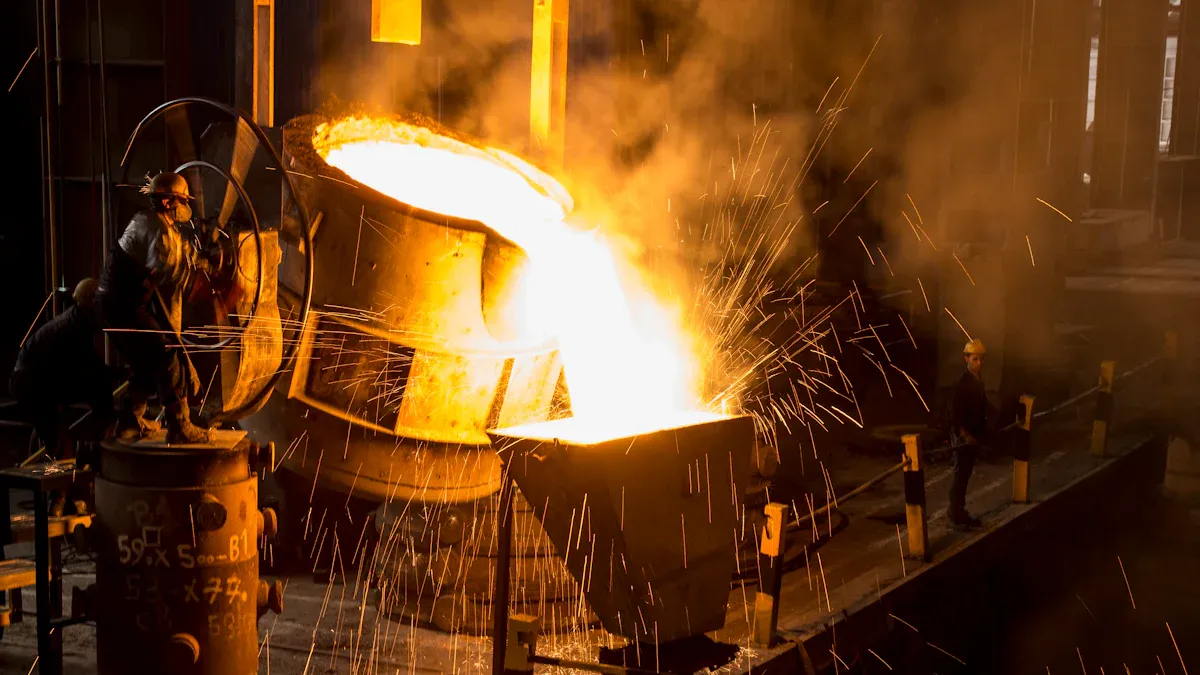
Hot chamber die casting is a highly efficient method for producing metal parts. This process integrates the melting and injection phases directly within the machine.
Integrated Melting and Injection
The hot chamber machine features a furnace that holds a molten metal bath. A gooseneck mechanism, submerged in this molten metal, draws the liquid into a shot chamber. A plunger then forces the molten metal directly into the die cavity. This direct integration streamlines the entire casting operation.
Continuous Molten Metal Supply
The machine maintains a continuous supply of molten metal. The furnace keeps the metal at the required temperature, ensuring it is always ready for injection. This constant availability eliminates the need for external ladling, which contributes to faster production cycles.
High-Speed Cycle Operation
Hot chamber machines operate at very high speeds. The integrated nature of the process allows for rapid cycling. Hot chamber die casting machines can achieve cycle times averaging 10 seconds per shot. Some machines can even reach 400 to 900 cycles per hour, translating to approximately 4 to 9 seconds per cycle. This process is particularly suitable for low-melting-point alloys such as magnesium. The operational steps include:
- The mold closes.
- Molten metal fills the pouring pot spaces.
- The injection punch moves down, sealing the side hole.
- The injection punch rapidly pushes molten metal through the gooseneck channel, nozzle, and into the mold cavity, where it solidifies.
- The injection punch lifts, allowing metal to flow back into the pouring pot.
- The mold opens, and the die-casting part is ejected.
Advantages of Magnesium Die Casting
Hot chamber die casting offers several benefits, especially for magnesium alloys.
High Production Efficiency
The rapid cycle times of the hot chamber process lead to high production efficiency. Manufacturers can produce a large volume of parts quickly, making it ideal for mass production.
Reduced Metal Handling
The integrated melting and injection system minimizes the need for manual metal handling. This reduces labor costs and improves safety in the manufacturing environment.
Lower Operating Costs
The efficiency and reduced handling associated with hot chamber casting often result in lower overall operating costs. The continuous process also optimizes energy use.
Denser Castings
Hot chamber die casting typically produces denser castings with less porosity. The alloys do not dissolve or erode under pressure, which contributes to reduced porosity and longer die life. Magnesium alloys offer one of the highest strength-to-weight ratios, making them ideal for complex, thin-walled, and high-performance parts. Magnesium is the lightest of all structural materials, being 33% lighter than aluminum and 75% lighter than steel.
Limitations of Hot Chamber Magnesium Die Casting
Despite its advantages, hot chamber magnesium die casting has certain limitations.
Material Compatibility Restrictions
The process is restricted to metals that fall within its acceptable temperature range. While magnesium is frequently used due to its relatively low melting point, certain magnesium alloys or other metals with higher melting points are not suitable for this method.
Smaller Part Size Capability
Hot chamber die casting machines cannot handle large molds or manufacture heavy components. They are more suitable for small to medium-sized parts. This limits the size and scope of products that can be manufactured using this technique.
Risk of Iron Contamination
The molten magnesium remains in contact with the machine’s iron components, such as the gooseneck and plunger. Over time, this can lead to iron pickup in the magnesium alloy, potentially affecting the material’s properties and increasing maintenance costs due to corrosion of machine parts.
Cold Chamber Magnesium Die Casting Explained
How the Cold Chamber Process Works
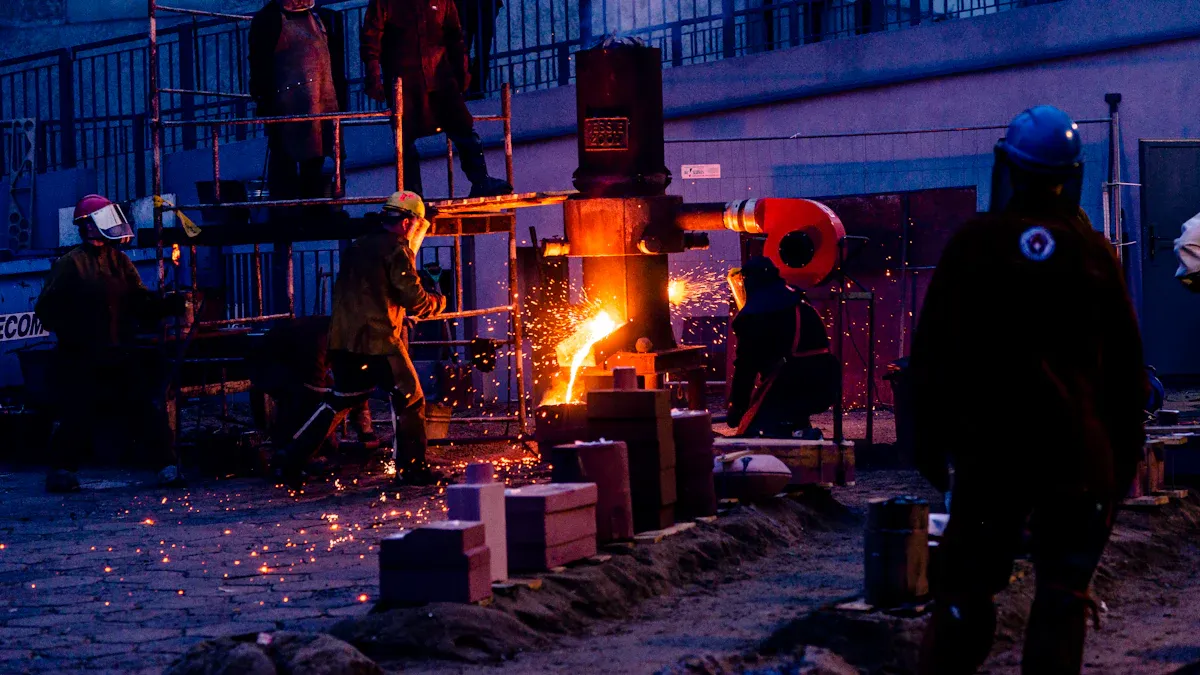
Cold chamber die casting employs a different approach compared to the hot chamber method. It separates the melting and injection stages.
Separate Melting Furnace
The cold chamber process begins with melting the metal in a furnace distinct from the casting machine. This external furnace allows for precise temperature control and accommodates a wider range of alloys, including those with higher melting points. Operators prepare the molten magnesium in this separate unit.
Ladling Molten Magnesium
Once the magnesium reaches the desired temperature, workers transfer a measured amount of molten metal from the furnace to the shot sleeve of the casting machine. This transfer typically involves a manual or automated ladle. The metal remains in the shot sleeve for a brief period before injection.
High-Pressure Injection
A powerful plunger then rapidly injects the molten magnesium from the shot sleeve into the closed die cavity. This high-pressure injection ensures the metal fills the mold completely and quickly. The metal solidifies under pressure, forming the desired part. The die then opens, and the casting ejects.
Advantages for Magnesium Die Casting
Cold chamber die casting offers specific benefits, particularly for magnesium applications.
Wider Alloy Versatility
The separate melting furnace allows the use of a broader spectrum of magnesium alloys. This includes alloys with higher melting temperatures or those requiring specific melting conditions. Manufacturers gain flexibility in material selection.
Larger Part Production
Cold chamber machines can handle larger shot sizes. This capability enables the production of bigger and heavier magnesium components. It suits projects requiring substantial part dimensions.
Minimized Iron Pickup
Molten magnesium has minimal contact with the machine’s iron components during the cold chamber process. This significantly reduces the risk of iron contamination in the final casting. The reduced contact helps maintain the alloy’s purity and mechanical properties.
Limitations of Cold Chamber Magnesium Die Casting
Despite its advantages, cold chamber magnesium die casting has certain drawbacks.
Slower Cycle Times
The ladling step adds time to each production cycle. This makes the cold chamber process inherently slower than the hot chamber method. Manufacturers experience lower production rates per hour.
Increased Porosity Risk
The transfer of molten metal via ladling can introduce air and oxides into the melt. This often leads to a higher risk of porosity within the final castings. Porosity can compromise the mechanical integrity of the part.
Higher Equipment Costs
Cold chamber die casting machines and their associated external melting furnaces typically represent a higher initial investment. The overall setup costs can be more substantial compared to hot chamber systems.
Direct Comparison: Hot vs. Cold Chamber Magnesium Die Casting
Comparing hot and cold chamber methods reveals significant differences in their operational characteristics and the resulting product attributes. These distinctions guide manufacturers in selecting the optimal process for specific magnesium components.
Production Efficiency and Cycle Time
The speed at which a die casting machine produces parts directly impacts overall manufacturing efficiency and cost.
Hot Chamber’s Speed Advantage
Hot chamber Magnesium Die Casting offers a notable speed advantage. The integrated melting and injection system allows for rapid cycling. Hot chamber machines are significantly faster, averaging 15 cycles per minute. This high rate reduces overall production time. The molten metal is already present within the machine, eliminating external transfer steps. This continuous availability contributes to exceptionally fast cycle times.
Cold Chamber’s Slower Pace
Conversely, cold chamber die casting typically exhibits slower production cycles. The process requires an additional step: ladling molten metal from a separate furnace into the shot sleeve. This transfer introduces a delay in each cycle. The molten material also has the potential to cool slightly during this transfer, which can further impact the overall production rhythm. Consequently, cold chamber processes have a longer production cycle compared to their hot chamber counterparts.
Part Quality and Mechanical Properties
The chosen die casting method profoundly influences the quality and mechanical integrity of the final magnesium parts.
Porosity in Cold Chamber Castings
Cold chamber castings often face a higher risk of porosity. The act of ladling molten magnesium from an external furnace into the shot sleeve can introduce air and oxides into the melt. These trapped gases manifest as pores within the solidified part. Porosity can compromise the mechanical integrity, reducing tensile strength and overall durability.
Hot Chamber’s Denser Parts
Hot chamber die casting generally produces denser parts with less porosity. The direct injection system minimizes air entrapment. The molten metal remains under pressure throughout the injection phase, which helps to compress any residual gases. This results in castings with superior internal soundness. The mechanical properties of die-cast magnesium alloys are influenced by porosity. Lower porosity, often achieved in hot chamber processes, contributes to enhanced tensile strength.
| Alloy Type | Typical Properties |
|---|---|
| Mg-Al base & Mg-Al-Zn base alloys | Good mechanical properties at room temperature; poor creep resistance above 120°C |
| AJ alloys (with strontium) | Superior creep performance and tensile strength at temperatures up to 175°C |
| AM50/AM60 alloys | High ductility, good corrosion, and impact resistance at ambient temperature |
| Die-cast magnesium alloys (general) | Tensile strength is influenced by porosity, which is affected by applied pressure and plunger velocity. Lower plunger velocity enhances skin thickness and improves tensile strength. |
Surface Finish Considerations
Both hot and cold chamber processes can achieve excellent surface finishes. However, the higher injection pressures often associated with cold chamber casting can sometimes lead to a slightly smoother finish. Conversely, the rapid solidification in hot chamber processes also contributes to fine surface details. The specific mold design and surface treatment play a more significant role in the final aesthetic quality than the chamber type itself.
Alloy Suitability and Material Versatility
The range of magnesium alloys compatible with each process varies considerably.
Hot Chamber’s Specific Alloy Focus
Hot chamber die casting has specific material compatibility restrictions. It primarily suits alloys with lower melting points that do not aggressively corrode the machine’s iron components. While magnesium is a prime candidate due to its relatively low melting temperature, the continuous contact with the gooseneck limits the use of certain reactive or high-temperature magnesium alloys. This process focuses on a narrower, but highly efficient, range of magnesium compositions.
Cold Chamber’s Broad Alloy Range
Cold chamber die casting offers greater alloy versatility. The separate melting furnace allows manufacturers to process a much broader spectrum of magnesium alloys. This includes alloys with higher melting points or those requiring specialized melting conditions. The molten metal has minimal contact with the injection mechanism’s iron components, reducing the risk of contamination. This flexibility makes cold chamber casting suitable for projects demanding specific, less common magnesium alloy properties.
Part Size and Complexity
The choice between hot and cold chamber processes significantly impacts the size and complexity of the magnesium parts a manufacturer can produce. Each method has inherent limitations and strengths regarding component dimensions and intricate designs.
Hot Chamber for Small, Intricate Parts
Hot chamber machines excel at producing small, intricate magnesium components. The integrated gooseneck and plunger system has a limited shot volume. This design restricts the amount of molten metal injected in a single cycle. Therefore, hot chamber die casting is ideal for parts requiring high precision and complex geometries but with smaller overall dimensions. Manufacturers often use this method for electronic housings, small automotive components, and consumer goods parts. The rapid injection speed also helps fill thin-walled sections effectively, creating fine details.
Cold Chamber for Larger Components
Cold chamber die casting offers greater flexibility for producing larger and heavier magnesium parts. The separate melting furnace and larger shot sleeve allow for much greater shot volumes. Operators can ladle a substantial amount of molten magnesium into the shot sleeve, enabling the production of bigger components. This method is suitable for structural parts, large housings, and components for aerospace or industrial machinery. While it can produce complex parts, the primary advantage lies in its capacity for larger dimensions.
Cost Implications for Magnesium Die Casting
The financial investment and ongoing expenses associated with hot and cold chamber magnesium die casting differ considerably. Manufacturers must evaluate these costs carefully when selecting a process.
Initial Investment Differences
The initial capital outlay for die casting equipment varies widely. Die-casting machines for magnesium can range from $30,000 to over $1,000,000. Hot chamber machines generally represent a lower initial investment compared to cold chamber systems. Hot chamber setups are often more compact and require less auxiliary equipment. Conversely, cold chamber die casting machines, especially those capable of producing large parts, typically demand a higher upfront cost. They require a separate melting furnace, ladling systems, and often more robust machinery to handle larger shot sizes and higher injection pressures. Advanced magnesium alloy die casting machines necessitate substantial capital outlay, which can impede adoption by small and medium-sized enterprises.
Operational and Maintenance Costs
Operational and maintenance costs also differ between the two methods. Hot chamber processes boast higher energy efficiency due to the continuous molten metal supply and rapid cycle times. This leads to lower energy consumption per part. However, the continuous contact of molten magnesium with the gooseneck and plunger can lead to increased wear and corrosion of these components. This necessitates more frequent maintenance or replacement of specific parts, potentially increasing maintenance costs over time. Cold chamber processes, while having slower cycle times and potentially higher energy consumption per cycle due to the separate melting and transfer steps, often experience less wear on the injection system components. The reduced contact with molten metal minimizes corrosion, which can lead to lower long-term maintenance costs for the injection unit itself. Labor costs can also vary; hot chamber’s automation often reduces direct labor, while cold chamber might require more manual intervention for ladling, depending on the automation level.
Choosing the Right Method for Magnesium Die Casting Projects
Selecting the appropriate die casting method for magnesium components significantly impacts project success. Manufacturers must carefully evaluate various factors to ensure optimal part quality, production efficiency, and cost-effectiveness. The decision between hot and cold chamber processes depends on specific project requirements.
Key Factors for Decision Making
Several critical considerations guide the choice between hot and cold chamber magnesium die casting. These factors help determine the most suitable manufacturing approach.
Production Volume Requirements
Production volume plays a crucial role in process selection. For large-volume production of complex parts, cold chamber die casting often proves advantageous due to its excellent repeatability and precision. While cold chamber die casting involves higher initial costs, it becomes more economical for large-scale production runs. Conversely, hot chamber die casting suits lower-volume runs and offers a cost-effective option for smaller or less complex parts.
Desired Part Specifications
The specific characteristics and performance needs of the final part heavily influence the method choice. Hot chamber magnesium die casting excels for parts requiring both high strength and minimal mass. Magnesium, being approximately 33% lighter than aluminum, offers significant weight savings. Hot chamber parts provide good strength and rigidity, making them robust and stiff components. They also offer superb EMI/RFI shielding, which benefits electronic applications. Hot chamber machines are preferable for casting small magnesium parts especially due to their shorter cycle times.
Budgetary Constraints
Financial considerations, including initial investment and ongoing operational costs, are paramount. Hot chamber die casting generally involves a lower equipment cost and offers faster cycle times due to its continuous molten metal supply. This results in lower upfront and running costs, making it ideal for high-volume production of small-to-medium-sized parts where speed and cost-efficiency are critical.
| Factor | Hot Chamber Die Casting | Cold Chamber Die Casting |
|---|---|---|
| Material Requirements | Zinc or magnesium | Aluminum, brass, copper, and magnesium alloys with higher melting points |
| Production Volume/Speed | High-speed, mass production | Moderate volume or slower speed is acceptable |
| Part Complexity/Size | Smaller, less complex parts | Larger, intricate, or structural parts |
| Cost Constraints | Lower setup cost, higher maintenance | Higher setup cost, lower maintenance, and longer tool life |
| Quality/Mechanical Properties | Better surface finish and cosmetics | Higher strength and tight tolerances |
Ideal Scenarios for Hot Chamber Magnesium Die Casting
Hot chamber die casting offers distinct advantages for particular applications. Manufacturers often choose this method when specific project parameters align with its strengths.
High-Volume, Small Parts
Hot chamber magnesium die casting is exceptionally well-suited for producing high volumes of small, intricate components. The automotive industry utilizes this process for small and medium-sized parts from magnesium alloys, enabling thin walls and complex shapes that are strong yet lightweight. This includes components like carburetor housings, transmission cases, brackets, and engine components. The process maintains tight tolerances for proper fit and function in high-performance systems and provides a smooth surface finish, reducing the need for secondary machining. Furthermore, hot chamber magnesium die casting is ideal for producing ultra-lightweight and strong housings for smartphones, tablets, and laptops in the consumer electronics (3C) industry. It ensures high precision for intricate designs. For automotive components like interior trims and gear knobs, it offers consistency and strength without adding unnecessary weight to the vehicle. Aerospace parts also benefit from the weight savings this method provides.
Applications Requiring High Density
The hot chamber process consistently produces denser castings with minimal porosity. This characteristic makes it the preferred choice for applications where internal soundness and mechanical integrity are paramount. Parts requiring superior strength-to-weight ratios and consistent material properties benefit significantly from the dense, uniform structure achieved through hot chamber die casting.
Ideal Scenarios for Cold Chamber Magnesium Die Casting
Cold chamber die casting provides solutions for projects with different demands, particularly regarding part size, alloy versatility, and production scale.
Large, Complex Parts
Cold chamber die casting excels at producing larger, more intricate, or structural parts. Its capacity for greater shot volumes allows manufacturers to create substantial magnesium components. This method accommodates complex geometries and larger dimensions, making it suitable for structural elements and larger housings where the hot chamber’s size limitations become a constraint.
Specialized Magnesium Alloys
The cold chamber process offers greater flexibility in material selection. It accommodates a broader range of magnesium alloys, including those with higher melting points or specific compositional requirements. This versatility extends to other materials like aluminum, brass, and copper, making it a robust choice for projects demanding specialized alloy properties not compatible with the hot chamber method.
Lower Volume Production
While capable of large-scale production, cold chamber die casting also suits moderate volume or slower speed requirements. Its inherent slower cycle times, compared to hot chamber, make it a viable option for projects where extreme speed is not the primary driver. This allows for greater flexibility in production scheduling and can be advantageous for specialized or custom orders.
Choosing between hot and cold chamber magnesium die casting involves critical trade-offs. Hot chamber processes offer faster cycle times and reduced oxidation risk, leading to denser parts. Conversely, cold chamber methods provide wider alloy versatility and accommodate larger components, though they may present higher porosity.
| Feature/Process | Hot Chamber Die Casting | Cold Chamber Die Casting |
|---|---|---|
| Oxidation/Fire Risk | Limits contact of molten magnesium with air, reducing oxidation and fires. | Molten metal in an open holding pot, implying higher exposure to air. |
| Cycle Time | Nozzle kept full of molten magnesium between shots to shorten cycle time. | Molten metal is transferred for each casting, potentially longer cycle times. |
| Porosity | Implies lower porosity due to a controlled environment. | High porosity level due to entrapped gases from high-velocity injection. |
Project-specific needs dictate the optimal method. Factors like part specifications, material requirements, and overall project details guide this decision. The right process ensures high-quality components, minimizes production costs, and prevents catastrophic failures, ultimately driving product success.
FAQ
What is the main difference between hot and cold chamber die casting?
Hot chamber die casting integrates melting and injection. Cold chamber die casting uses a separate melting furnace. This distinction affects process speed and material handling.
Which method is better for high-volume production of small magnesium parts?
Hot chamber die casting is ideal for high-volume production of small magnesium parts. Its rapid cycle times and integrated process make it highly efficient for these applications.
Can cold chamber die casting produce larger magnesium components?
Yes, cold chamber die casting can produce larger magnesium components. It accommodates greater shot volumes due to its separate melting furnace and larger shot sleeve capacity.
Does hot chamber die casting lead to denser magnesium parts?
Hot chamber die casting generally produces denser magnesium parts. The direct injection system minimizes air entrapment, resulting in superior internal soundness and reduced porosity.
Which process offers greater versatility in magnesium alloy selection?
Cold chamber die casting offers greater versatility in magnesium alloy selection. Its separate melting furnace allows processing a broader range of alloys, including those with higher melting points.
Is iron contamination a concern in hot chamber magnesium die casting?
Yes, iron contamination is a concern in hot chamber magnesium die casting. Molten magnesium continuously contacts the machine’s iron components, potentially affecting material properties over time.
What are the typical initial cost differences between the two methods?
Hot chamber machines generally represent a lower initial investment. Cold chamber machines, especially for large parts, typically demand a higher upfront cost due to additional equipment like separate furnaces.
Which method is suitable for specialized magnesium alloys?
Cold chamber die casting is suitable for specialized magnesium alloys. It handles alloys with higher melting points or specific compositional requirements not compatible with the hot chamber method.