
Introduction
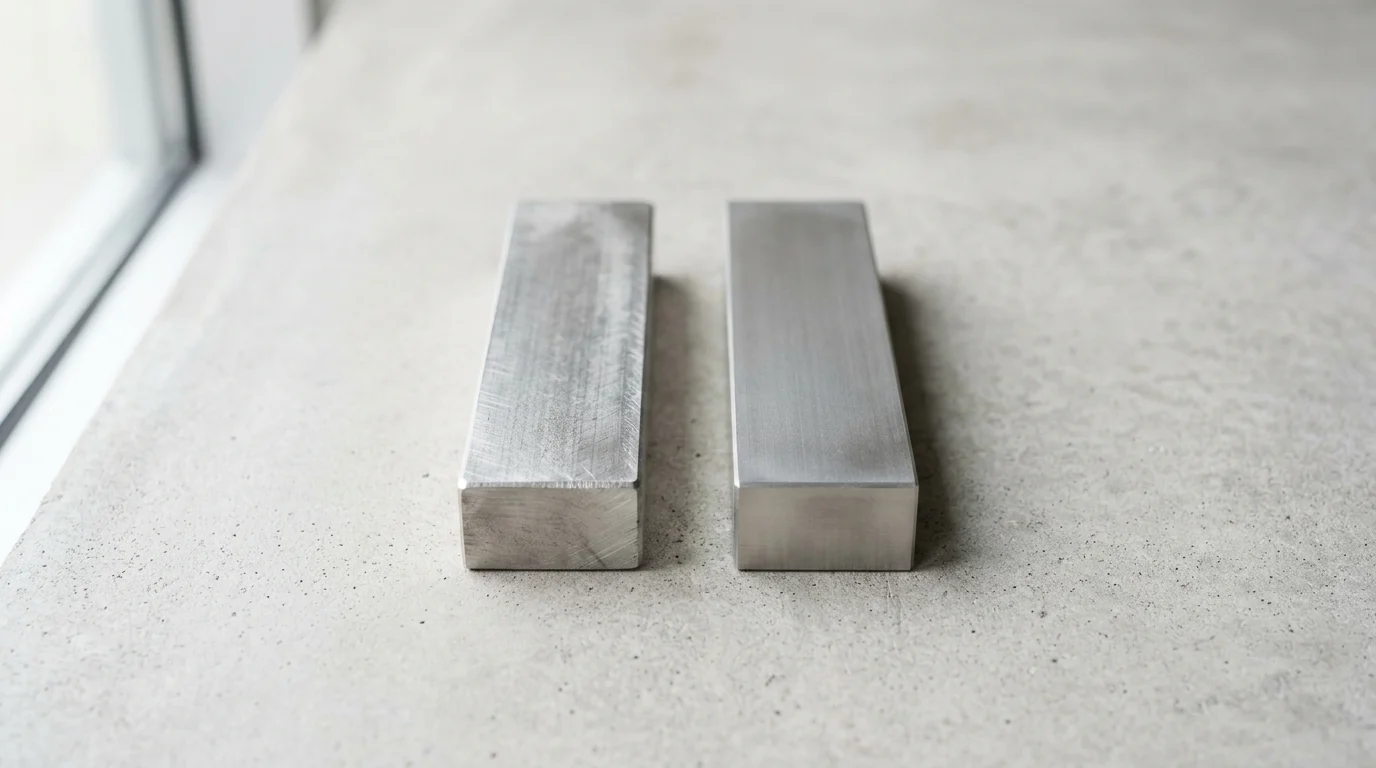
Choosing between AZ31 and AZ91 is less about picking a stronger magnesium alloy and more about matching material behavior to manufacturing method and service demands. Although both belong to the same AZ family, their different aluminum content leads to clear differences in formability, castability, strength, ductility, corrosion response, and typical end uses. This comparison explains how those compositional changes affect microstructure and performance, so readers can quickly see why AZ31 is commonly associated with wrought products while AZ91 is favored for cast components, and how that distinction shapes practical material selection.
Why AZ31 vs AZ91 Magnesium Alloy Matters
Magnesium alloys represent a critical frontier in modern lightweight engineering, offering a density of approximately 1.74 g/cm³—roughly 35% lighter than aluminum and 75% lighter than steel. Within the commercial magnesium sector, the aluminum-zinc (AZ) alloy series dominates global tonnage. Understanding the technical divergence between AZ31 and AZ91 is foundational for metallurgists and mechanical engineers, as these two alloys serve as the primary pillars for wrought and cast magnesium applications, respectively.
The numerical designations in the AZ series directly indicate their nominal alloying composition: AZ31 contains roughly 3% aluminum and 1% zinc, while AZ91 contains roughly 9% aluminum and 1% zinc. This seemingly minor difference in aluminum concentration radically alters the metallurgical phase equilibrium, fundamentally dictating whether the material can be extruded into structural profiles or must be injected into complex die-cast molds.
Alloy choice, process route, and end-use risk
The selection between AZ31 and AZ91 is rarely a matter of simple substitution; it is a rigid decision dictated by the required manufacturing process route. AZ31 is specifically engineered for solid-state deformation. Its lower aluminum content limits the formation of brittle intermetallic phases, allowing billets to be extruded, rolled, or forged without catastrophic cracking. Conversely, attempting to extrude AZ91 typically results in severe hot shortness and transverse cracking due to its wide freezing range and high volume fraction of secondary phases.
Failing to align the alloy with the correct process route introduces severe end-use risks. Specifying AZ31 for a complex, thin-walled casting will lead to unacceptable fluidity, high shrinkage porosity, and severe hot tearing during solidification. The process routing inherently ties the alloy choice to the fundamental geometry and structural requirements of the final component.
Common commercial applications
Commercially, AZ31 is the default specification for wrought magnesium products. It is heavily utilized in aerospace structural brackets, concrete tooling (such as bull floats), vibration-damping fixtures, and increasingly in consumer electronics where AZ31B sheet is stamped or hydroformed into laptop and tablet chassis. Its ability to be processed into standard mill forms (plate, sheet, bar) makes it highly accessible for CNC machining applications.
AZ91, particularly in its high-purity AZ91D variant, is the workhorse of the high-pressure die casting (HPDC) industry. It accounts for the vast majority of automotive magnesium applications, including steering wheel armatures, seat frames, valve covers, and transmission housings. By utilizing AZ91D, automotive engineers can routinely reduce the mass of a steering column assembly by 1.2 kg to 1.5 kg compared to equivalent aluminum die castings, directly translating to improved vehicle fuel economy and altered center of gravity dynamics.
Core Differences Between AZ31 and AZ91
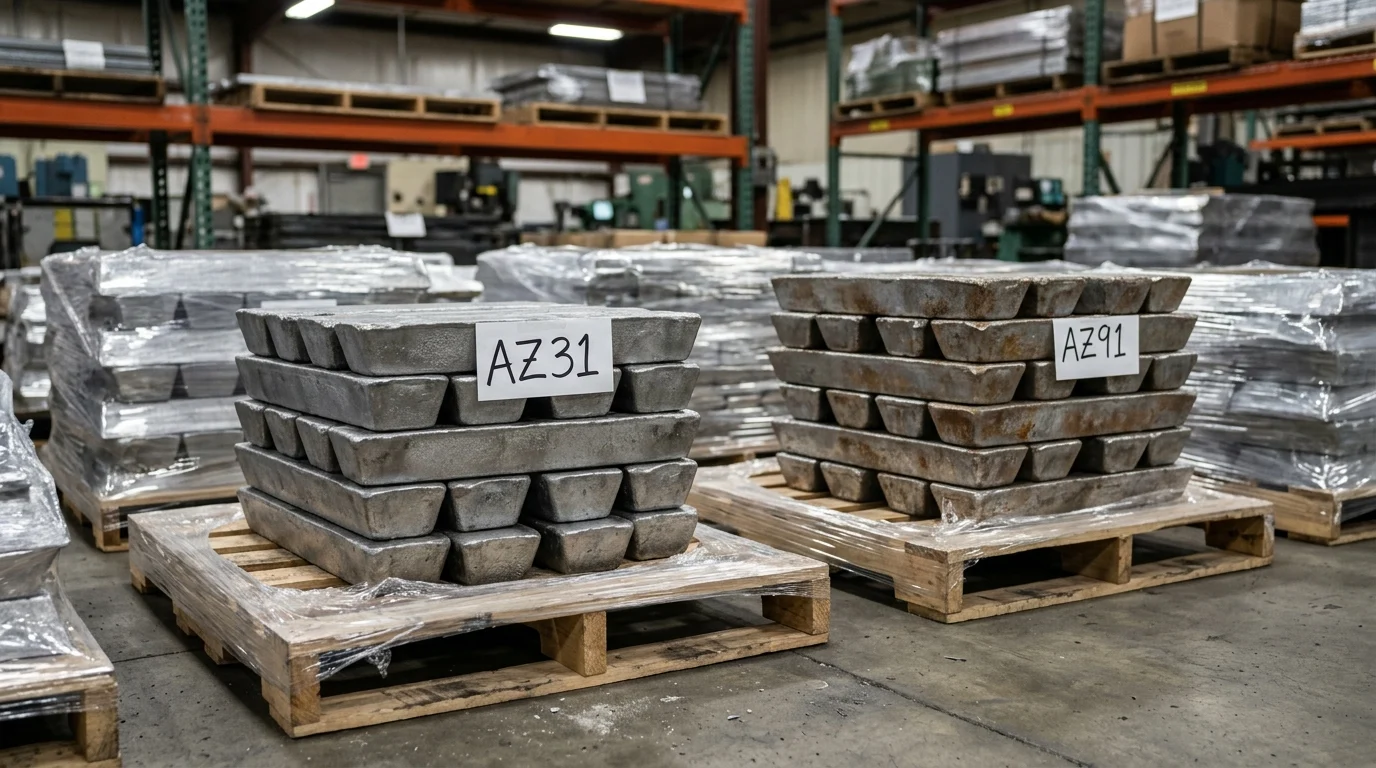
The core divergence between AZ31 and AZ91 lies in their chemical composition and the resulting microstructural evolution during solidification and cooling. Aluminum acts as the primary solid solution strengthener in magnesium, but its solubility is highly temperature-dependent, dropping from a maximum of 12.7% at the eutectic temperature to less than 2% at room temperature.
This solubility limit means that the 3% aluminum in AZ31 can largely remain in a single-phase solid solution (alpha-magnesium) at room temperature, provided optimal cooling or thermo-mechanical processing. In stark contrast, the 9% aluminum in AZ91 vastly exceeds room-temperature solubility, forcing the precipitation of the beta phase.
Composition and microstructure
The microstructural defining feature of AZ91 is the massive network of the Mg17Al12 intermetallic compound (beta phase) that precipitates along the grain boundaries of the primary alpha-magnesium matrix. This hard, brittle phase is responsible for the alloy’s high hardness and excellent castability but is highly detrimental to ductility. AZ31, lacking this continuous beta-phase network, exhibits a relatively homogeneous, single-phase microstructure that facilitates plastic deformation.
| Element/Property | AZ31B (Nominal %) | AZ91D (Nominal %) |
|---|---|---|
| Aluminum (Al) | 2.5 – 3.5 | 8.3 – 9.7 |
| Zinc (Zn) | 0.6 – 1.4 | 0.35 – 1.0 |
| Manganese (Mn) | 0.20 min | 0.15 – 0.50 |
| Silicon (Si) | 0.10 max | 0.10 max |
| Copper (Cu) | 0.05 max | 0.030 max |
Manganese is present in both alloys, acting not as a primary strengthener, but as a crucial refining agent. It combines with iron impurities to form intermetallic particles that precipitate out of the melt, drastically improving the baseline corrosion resistance of the magnesium matrix.
Product forms, tempers, and manufacturing routes
Due to its microstructural suitability for deformation, AZ31 is globally supplied in wrought product forms. It is available as hot-rolled plate, cold-rolled sheet, and extruded profiles. The most common temper for AZ31 sheet is H24 (strain hardened and partially annealed), which optimizes the balance between tensile strength and formability, or the O temper (fully annealed) for maximum deep-drawing capability.
AZ91 is virtually never supplied in wrought form. It is produced as ingots destined for remelting in sand casting, permanent mold casting, or, most prominently, cold-chamber high-pressure die casting. Cast AZ91 parts are typically used in the F temper (as fabricated/cast). For specialized sand or investment castings (often using the AZ91C or AZ91E variants), the T6 temper (solution heat-treated and artificially aged) is employed to dissolve the coarse Mg17Al12 network and precipitate fine dispersions, maximizing yield strength.
Mechanical and Performance Comparison
Mechanical performance in magnesium alloys is a direct trade-off between ultimate tensile strength (driven by aluminum content and precipitation hardening) and ductility (driven by phase homogeneity and grain size). Engineers must scrutinize the exact operational loads, as magnesium alloys exhibit distinct asymmetry between tensile and compressive yield strengths, a phenomenon known as the Bauschinger effect, which is particularly pronounced in wrought AZ31.
While both alloys provide an exceptional stiffness-to-weight ratio, their failure modes under stress diverge. Wrought AZ31 will generally yield and deform plastically before failure, absorbing impact energy. Cast AZ91 will support higher static loads but is prone to brittle fracture with minimal plastic deformation once its ultimate tensile limit is breached.
Strength, ductility, and hardness
The mechanical properties of AZ31 and AZ91 reflect their distinct microstructures. AZ31B-H24 sheet typically demonstrates a yield strength of approximately 220 MPa and an ultimate tensile strength (UTS) of 290 MPa, accompanied by a robust elongation at break of 15%. This high ductility is critical for crash-structure components that require energy absorption.
| Property | AZ31B-H24 (Sheet) | AZ91D (Die Cast) |
|---|---|---|
| Ultimate Tensile Strength (MPa) | 290 | 230 |
| Yield Strength (MPa) | 220 | 150 |
| Elongation at Break (%) | 15.0 | 3.0 |
| Hardness (Brinell) | 73 | 63 |
| Modulus of Elasticity (GPa) | 45 | 45 |
Conversely, AZ91D in the as-cast state typically offers a yield strength of 150 MPa and a UTS of 230 MPa, but its elongation is severely restricted to around 3%. However, AZ91D compensates with superior hardness and wear resistance, making it suitable for threads and fastener engagements where AZ31 might suffer from galling or pull-out under high torque.
Corrosion, castability, and formability
Corrosion resistance is a critical differentiator. AZ91D is classified as a high-purity alloy. The continuous Mg17Al12 beta phase along the grain boundaries acts as a dielectric barrier, retarding anodic dissolution. When atmospheric corrosion occurs, AZ91D often outperforms AZ31, provided heavy metal impurities (Fe, Ni, Cu) are kept strictly below their threshold limits.
In terms of manufacturability, AZ91D exhibits exceptional castability. Its high aluminum content lowers the melting point to approximately 595°C and provides excellent fluidity, enabling the casting of complex geometries with wall thicknesses down to 1.5 mm. AZ31, while poor for casting, boasts excellent superplastic formability at elevated temperatures. Because magnesium has a hexagonal close-packed (HCP) crystal structure, room-temperature forming is difficult; however, heating AZ31 sheet to between 200°C and 300°C activates additional slip planes, allowing for deep drawing and complex stamping with minimal springback.
Procurement, Quality, and Compliance
Procuring commercial magnesium alloys requires rigorous attention to supply chain documentation, quality control, and safety compliance. The extreme reactivity of molten and finely divided magnesium means that procurement goes beyond simple material costs; it encompasses specialized handling protocols, shipping regulations, and stringent mill certifications.
Quality assurance in magnesium supply is heavily dependent on controlling trace impurities. Even minor deviations in iron, nickel, or copper parts-per-million (ppm) can exponentially accelerate galvanic corrosion rates, effectively ruining the structural integrity of the final component.
Mill certification and composition tolerances
When sourcing AZ91, buyers must ensure the ingot complies with ASTM B93/B93M standards for high-purity die-casting alloys. Mill test reports (MTRs) must verify that iron is held below 0.005%, nickel below 0.002%, and copper below 0.030%. If these tolerances are exceeded, the alloy defaults to standard AZ91A or AZ91C grades, which suffer from significantly degraded salt-spray corrosion resistance.
For AZ31, procurement is typically governed by ASTM B90/B90M for sheet and plate, or ASTM B107/B107M for extruded profiles. Certifications must validate the specific temper (e.g., O, H24) alongside chemical composition. Because wrought processing introduces directional grain flow, high-end aerospace procurements often require ultrasonic testing to ensure billets are free from internal voids and oxide inclusions prior to extrusion or rolling.
Cost, export, and handling considerations
The cost structure of AZ31 and AZ91 differs fundamentally. AZ91 ingot trades as a commodity closely linked to primary magnesium spot prices, typically carrying a modest premium of $300 to $500 per metric ton over pure magnesium. AZ31, however, incurs massive conversion costs. The energy-intensive processes of direct-chill casting, homogenization, and multi-pass hot rolling can push the final cost of AZ31 plate to three or four times the base ingot price.
Handling and export compliance are critical operational factors. Magnesium powder, turnings, and swarf generated during the CNC machining of either alloy are highly combustible. Facilities must strictly comply with NFPA 484 standards for combustible metals, utilizing Class D fire extinguishers and wet-dust collection systems. Furthermore, standard export controls may apply to high-purity magnesium alloys depending on the jurisdiction, requiring end-user certificates to prevent diversion into restricted defense applications.
How to Choose Between AZ31 and AZ91
Choosing between AZ31 and AZ91 requires a systematic evaluation of the component’s lifecycle, geometry, and production scale. The decision is rarely ambiguous; the distinct processing and mechanical profiles of these two alloys naturally funnel engineering projects toward one specific material path.
Engineers must balance the high initial capital expenditure (CapEx) of tooling against the per-unit material cost, while simultaneously ensuring the mechanical properties meet the required safety factors for impact, fatigue, and environmental exposure.
Selection criteria by application
The primary selection criterion is component geometry. If the design features intricate internal coring, varying wall thicknesses, integrated mounting bosses, and requires near-net-shape manufacturing to eliminate secondary machining, AZ91 is the mandatory choice via high-pressure die casting. The process allows for cycle times measured in seconds, making it highly efficient for mass production.
Conversely, if the application requires a large, flat panel, a continuous linear profile (like a rail or tube), or demands plastic deformation and energy absorption during a crash event, AZ31 is required. AZ31 extrusions and formed sheets provide superior structural integrity under dynamic loading, where the brittle nature of cast AZ91 would result in catastrophic failure.
When AZ31 or AZ91 is the better option
AZ91 is definitively the better option for high-volume automotive and consumer electronic applications where production runs exceed 50,000 to 100,000 units. At this scale, the steep initial tooling costs for die-casting molds (often ranging from $50,000 to $150,000) are rapidly amortized, and the low per-part cycle time yields an exceptionally low unit cost.
AZ31 is the superior choice for low-to-medium volume manufacturing, prototyping, and large-scale structural frames. In industries like aerospace, specialty robotics, or custom automotive racing, the ability to CNC machine parts from standard AZ31 tooling plate or weld AZ31 extrusions (using AZ61 or AZ92 filler wire) avoids massive tooling investments. Ultimately, AZ31 provides the mechanical resilience of a wrought material, while AZ91 offers the geometric freedom and economic scaling of a premier casting alloy.
Key Takeaways
- The most important conclusions and rationale for AZ31 vs AZ91 Magnesium Alloy
- Specs, compliance, and risk checks worth validating before you commit
- Practical next steps and caveats readers can apply immediately
Frequently Asked Questions
What is the main difference between AZ31 and AZ91 magnesium alloy?
AZ31 has about 3% aluminum and is mainly used for wrought products like sheet, plate, and extrusions. AZ91 has about 9% aluminum and is mainly used for die-cast parts.
Which alloy is better for machining sheet or bar stock?
AZ31 is usually the better choice because it is widely supplied in wrought forms and handles extrusion, rolling, and CNC machining more reliably than AZ91.
Which alloy should I choose for die casting complex thin-wall parts?
AZ91, especially AZ91D, is the standard option for high-pressure die casting because it offers better fluidity and castability for detailed automotive and industrial components.
Why isn’t AZ91 commonly used for extrusion or forging?
Its higher aluminum content forms more brittle phases, which can cause hot shortness and cracking during solid-state forming. AZ31 is much more suitable for extrusion and forging.
Can JHPIM Supplier help with magnesium alloy part selection?
Yes. If your project involves lightweight metal parts, share your process, geometry, and performance needs through jhpimsupplier.com to identify whether AZ31 or AZ91 fits better.